ARTICLES
How to Vet a Tattoo Artist Before You Book
How to choose a tattoo artist without getting burned: reading healed portfolios, spotting scratcher red flags, checking shop hygiene, and the consult questions that matter.
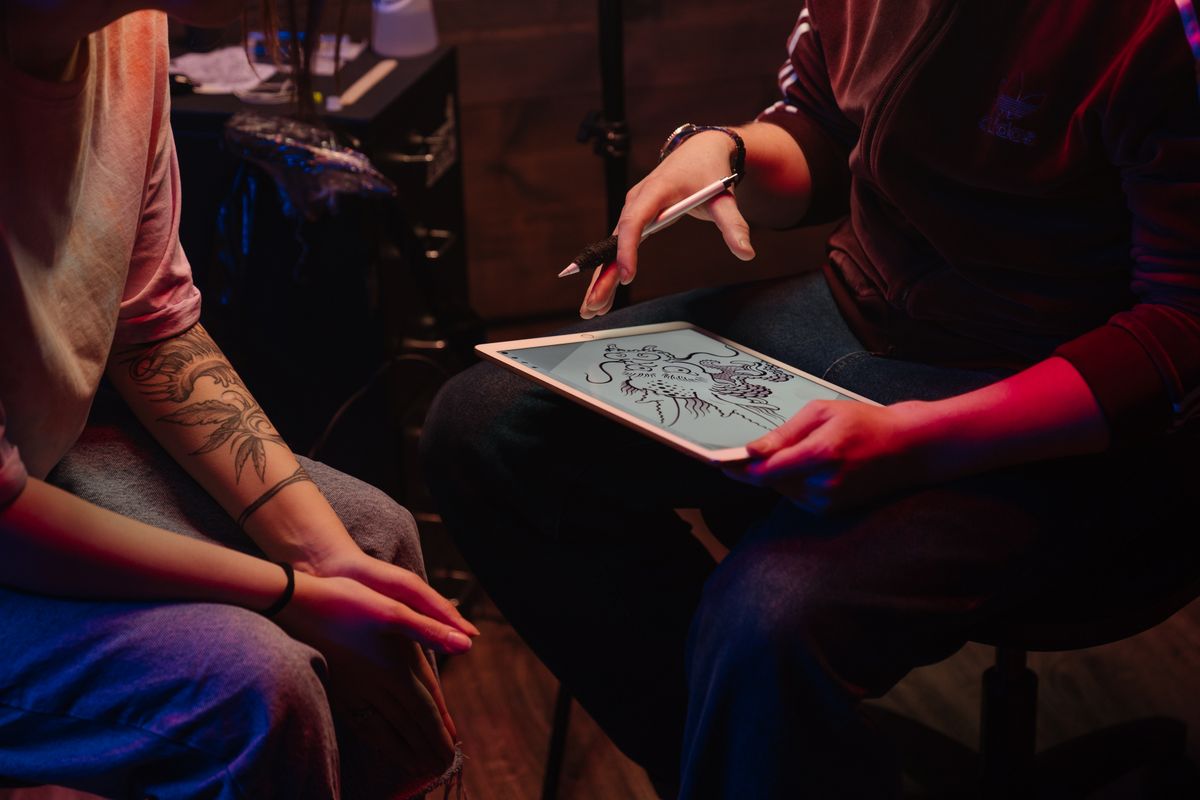
TL;DR: How to choose a tattoo artist comes down to evidence, not vibes. Look at healed work, not just fresh shots. Match the artist to your actual style instead of booking the closest banger. Walk if you see scratcher signs: wobbly lines, traced flash, no healed photos, sloppy hygiene. Check licensing and shop cleanliness in person. Ask real consult questions before you put down a deposit.
How to choose a tattoo artist is the one decision that determines everything else about your piece. Not the design. Not the placement. The hand holding the machine. You can have the best reference on the planet and still walk out with blown-out linework and patchy black if you booked the wrong person off a pretty grid.
First-timers and collectors make the same mistake here. They fall in love with one banger on a feed, hit book, and never look closer. That one photo tells you almost nothing. It might be the artist's single best day, shot fresh under ring light, color-graded to death. What you need is the boring stuff: healed work, consistency across a body of pieces, a clean shop, and a person who answers questions straight.
This is the vetting checklist. Portfolio reading, red flags, hygiene, consult, deposit. Run every artist through it before money changes hands.
How Do You Read a Tattoo Portfolio the Right Way?
Read a portfolio by separating fresh shots from healed work, then judging consistency across the whole body of pieces, not the single best one. Fresh tattoos look tighter, darker, and crisper than they'll ever look again. Healed work, ideally one to three years in skin, is the only honest preview of what you're paying for. An artist confident in their craft will show both.
Fresh photos are useful for one thing: judging technical execution on the day. Clean lines, even saturation, smart proportion. But fresh ink is swollen into the dermis, the black reads heavier than it heals, and color looks juiced. Book off fresh-only and you're trusting a photo that's actively lying to you.
Look across ten or twenty pieces, not one. Is the linework consistent banger to banger, or is one piece crisp and the next wobbly? Steady hands produce steady work. One great tattoo in a sea of mid ones might just mean the client picked the design and the artist got lucky.
For the full breakdown on why fresh and healed look so different, how tattoos age covers what actually happens to ink under the surface over time.
What Are the Biggest Tattoo Artist Red Flags?
The biggest red flags are wobbly or inconsistent linework, a portfolio stuffed with traced wall flash, zero healed photos, sketchy hygiene, and copied designs lifted from other artists. Any one of these is reason to slow down. Two or more and you walk. A real artist shows variety, healed proof, and original work: a scratcher shows the same small flash pieces over and over.
Scratcher signs are specific. Uneven, shaky lines that should be uniform. Solid color packed with visible trauma: blood, patchy light spots, beat-up skin. If the line weight varies dramatically across a piece that's supposed to be clean, that's a technical tell, not a style choice.
The flash tell is real too. If the portfolio is all small, common pieces you'd find on the shop wall, you're looking at a tracer, not an artist. Original work of real detail, across color, black and grey, different styles, is the signature of someone who does this as their medium, not a side hustle stencil-pusher.
Copying is its own flag. An artist who rips another artist's custom piece and re-tattoos it as their own isn't someone you want putting permanent work on your body. Originality says they can actually draw.
And the price tell: if someone drops their rate dramatically to get you booked, ask why they can't fill their books at normal rates.
Why You Shouldn't Book Off Instagram Alone
Don't book off Instagram alone because a feed is a curated highlight reel, not a body of evidence. The algorithm rewards the single juiciest fresh shot, buries healed work, and shows you nothing about hygiene, consistency, or how the artist behaves in a consult. A grid optimized for likes is optimized against the exact information you need to vet someone.
The platform problem is bigger than any one artist. Feeds compress everything into the same square, strip the context, placement, scale, how long it's been healed, and reward color grading over craft. We dug into why Instagram is quietly failing tattoo artists and the collectors trying to vet them.
This is half of why Tatulogue exists. Artists catalogue work with the context a feed throws away: style, placement, healed timeline. You're vetting on information, not a thumbnail. More on the why behind it in what is Tatulogue.
If you're weighing where to actually find and book artists, Tatulogue vs Booksy vs StyleSeat breaks down what each platform is built for.
How Do You Match an Artist to Your Style?
Match an artist to your style by booking a specialist, not a generalist who dabbles. An artist whose entire portfolio is bold traditional will crush a bold traditional piece and likely fumble delicate fine line, and vice versa. Find someone whose existing body of work already looks like the tattoo you want, then check they've done it at your scale and placement.
Styles are not interchangeable skill sets. Packed black and traditional demand different machine handling, different needle choices, and a different eye than micro-realism or single-needle fine line. Someone elite in one lane can be average in another. The portfolio tells you which lane is theirs.
Scale and placement matter as much as style. An artist who nails large back pieces hasn't necessarily proven they can hold fine detail on a finger. Look for your specific combination, style, size, body part, in their healed work.
If you're still narrowing what you actually want, the 2026 tattoo styles guide maps the major styles, and the complete fine line guide covers the vetting that delicate work specifically demands. Style clarity makes artist matching ten times easier.
How Do You Check Shop Hygiene and Licensing?
Check hygiene by visiting in person before you book and confirming the shop runs like a medical space: single-use needles opened in front of you, a working autoclave for reusable tools, fresh gloves, barrier-wrapped surfaces, and sharps disposal. Confirm the shop and artist hold current local licensing. If anyone reuses needles or dodges your sterilization questions, leave.
The infection risk here is not hypothetical. Tattooing breaks skin and generates blood, which is exactly why OSHA's Bloodborne Pathogens standard applies to the tattoo industry: every legitimate shop should operate under a written exposure-control plan. Most states also require artists to carry a bloodborne pathogens certification before they can be licensed, and many run a state or county health-department permit on top of it. Requirements vary by state, so check yours.
What to actually look for on the walkthrough: needles in sealed, single-use packaging cracked open in front of you. Reusable tools sterilized in a real autoclave, not a wipe-down. Gloves changed between clients, surfaces wrapped in fresh barrier film, ink in single-use caps. A clean shop looks closer to a dentist's office than a back room.
Ask the sterilization questions out loud. A pro answers plainly and is glad you asked. Defensiveness is the answer.
What Should You Ask at the Consultation?
Ask about their process for your specific piece, how pricing works, whether the deposit applies to the final cost, the revision process, and the touch-up policy. A good consult is a two-way read: you're checking their answers, they're checking whether your idea is sound. Most reputable artists don't charge for a basic consultation: a hefty consult fee is itself a flag.
Run through the practical list. How do they translate a reference into a stencil, and when do you see the design? Hourly, flat, or day rate, and roughly how many sessions? Walk in with these questions ready so you're not improvising in the chair.
Watch how they handle pushback. An artist who tells you your fine-line idea is too small for your forearm, or that the placement will blow out, is protecting your tattoo, and protecting their portfolio. The overworked-skin breakdown shows what happens when nobody says no. Yes-to-everything is not a green flag.
On consult fees specifically: a respected artist's take is that a consult shouldn't cost anything, and a steep upfront charge can signal scammy pricing downstream.
How Do Tattoo Deposits Work?
A deposit holds your slot and pays the artist for design time, and it's almost always non-refundable. It typically comes off the final price of the tattoo, so you're not paying extra: you're paying early. Standard practice. What you want to confirm before handing it over is the exact amount, that it applies to the total, and the reschedule and cancellation policy.
Non-refundable is the norm, not a scam. The deposit protects the artist's time: the hours spent drawing your custom piece and the slot they're holding instead of booking someone else. Expecting a serious artist to draw custom work for free is the actual red flag.
Get the cancellation terms in writing. How much notice keeps your deposit alive if life happens? No-notice no-shows usually forfeit. Knowing the rule upfront beats arguing about it later. A clear deposit policy is a sign of a professional operation, not a warning.
A good tattoo starts with good vetting, and good vetting is unglamorous. Look at healed work. Judge consistency, not the one banger. Match the artist's real lane to your actual style. Walk on wobbly lines, traced flash, no healed proof, or a shop that won't talk hygiene. Visit in person, confirm licensing, ask the consult questions, then put down the deposit with eyes open.
Do this and you skip the cover-up consultation three years from now. Rush it and you become someone else's red-flag story.
We track this stuff in the open: real healed work, honest artist takes, no content-farm filler. The Tatulogue newsletter at tatulogue.com is where collectors stay sharp on who's worth booking and what to watch for.