ARTICLES
Black and Grey vs Color Tattoos: How to Actually Choose
Black and grey vs color tattoos: the honest breakdown of aging, skin tone, cost, and which styles suit which. What holds, what fades, and how to decide before you book.
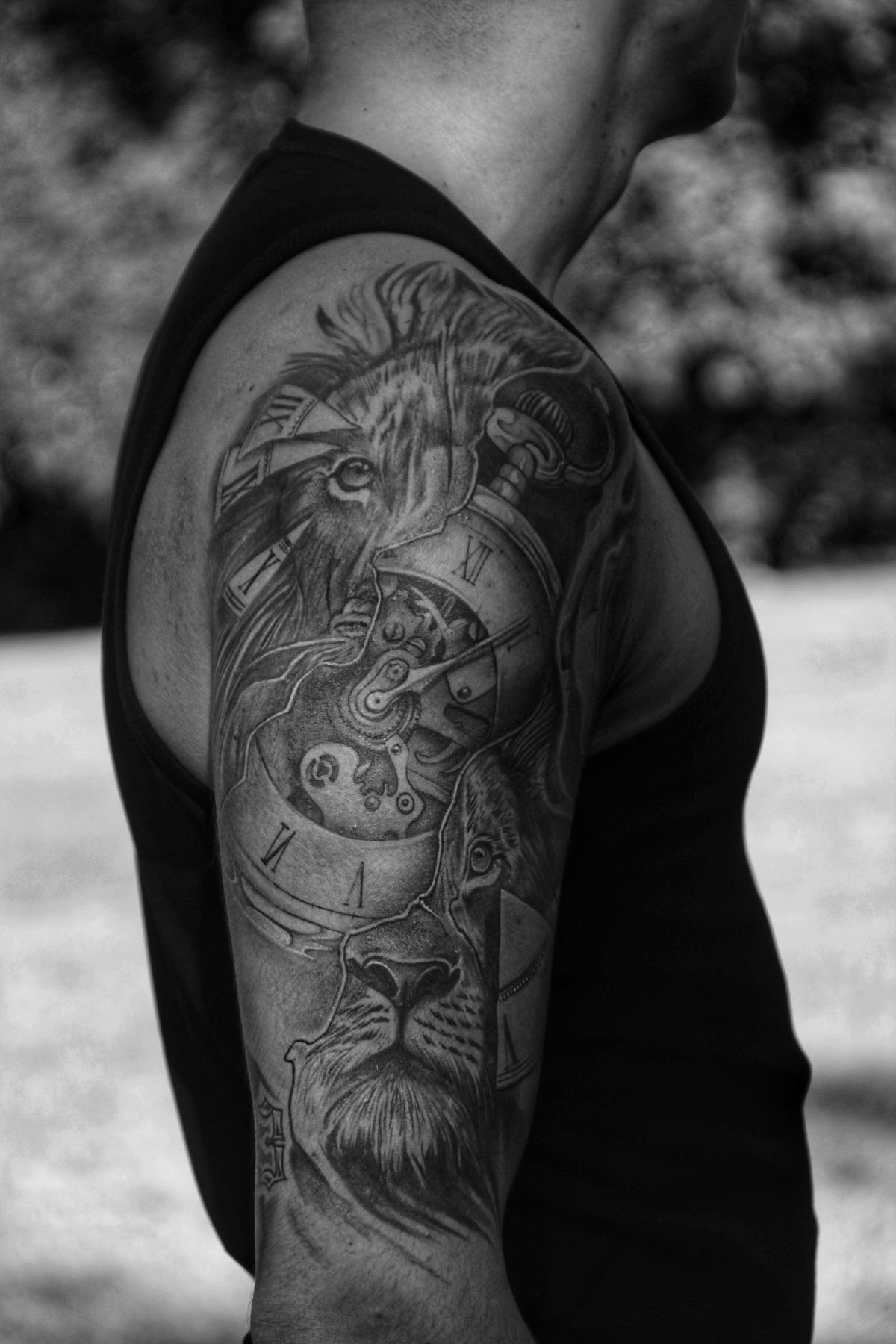
TL;DR: Black and grey vs color tattoos comes down to longevity, skin tone, cost, and style. Black and grey holds harder, ages cleaner, and reads on every skin tone. Color hits harder up front but fades unevenly, costs more, and needs the right pigments for your skin. Neither is "better." One suits the piece you actually want, and the conditions your skin and budget can hold.
You've seen both go wrong. The color realism portrait that looked like a photograph fresh, then turned into a muddy patch of orange and grey by year six. The black and grey dragon that still reads clean and deliberate fifteen years in. Same artist tier, same placement, completely different aging stories. The difference wasn't luck. It was the choice made at the booking stage.
Black and grey vs color tattoos isn't a taste war. It's a set of tradeoffs: how each one holds, how it sits on your skin tone, what it costs you in chair time, and which styles are actually built around it. Black and grey leans on contrast: pure black diluted into greywash, carrying the whole image with value alone. Color leans on hue, which means more pigments, more variables, and more ways to drift over time.
Knowing how each one behaves before you commit is the whole game. A banger in one style is a regret in the other. Here's the honest version.
Black and Grey vs Color Tattoos: The Short Answer
Black and grey ages cleaner, reads on every skin tone, and usually costs less in chair time. Color hits harder fresh but fades unevenly, needs the right pigments for your skin, and runs longer sessions. Pick black and grey for longevity and realism that holds. Pick color when the design genuinely needs hue: neo trad, color realism, anything where the punch is the point.
Aging: Black Holds, Color Drifts
This is the big one, and it's not close. Black pigment is the most stable ink in the kit. It fades to a softer grey-green over decades but it keeps its mass: the image stays readable. Color pigment particles are larger, less stable, and far more sensitive to UV, which is why color ages unevenly while black and grey settles into an almost photographic softness.
The real problem with color isn't that it fades. It's that it fades unevenly. Reds drift orange. Yellows and whites can vanish inside a few years. Blues and greens hold okay. So a color piece doesn't mellow uniformly the way black and grey does: it goes patchy. One pigment drops out and the whole composition reads wrong.
Black and grey carries the image on value, not hue. When the greys soften, you still have the structure: the contrast between dark and light that built the piece. That's why black and grey work needs fewer touch-ups and reads clean for decades when packed correctly.
One honest caveat: a badly applied black and grey piece, under-saturated, wrong depth, will fade faster than a master-level color tattoo on a protected spot. Saturation and placement beat ink type. We broke this down fully in how tattoos age, and it applies double here.
How Each Reads on Different Skin Tones
Black and grey is the more forgiving choice across skin tones because it works on contrast, not hue. Color is doable on any skin, but it demands the right pigment selection, deep, saturated tones over pastels, and an artist who builds for the way melanin filters ink. On deeper skin, light and warm colors are the first to disappear.
Here's the part a lot of shops skip. Your skin is a filter sitting over the ink. On lighter skin, color sits closer to how it looks in the bottle. On deeper skin tones, the same pigment reads differently, and warm, light colors like yellow, orange, and pastels present the biggest visibility challenge. White ink as a "highlight" often just heals invisible.
What works on deeper skin is saturation. Deep jewel tones: royal blue, emerald, magenta, crimson, read clearly through melanin-rich skin where a baby pink or pale yellow would heal to nothing. That's not a limitation, it's a palette. A good artist adjusts saturation and contrast so the piece reads intentional, not washed out.
Black and grey sidesteps most of this. Bold black, solid fills, greywash shading: they hold contrast on every skin tone. On deeper skin the greys blend into something quieter and more elegant, which is a feature if that's the look you're after.
The rule: if an artist hasn't shown you healed color work on skin like yours, ask for it before you book. No portfolio match, no deposit.
Cost and Session Time: Color Runs Longer
Color almost always costs more than black and grey for the same design. Expect roughly 10–20% more on comparable small-to-medium pieces, scaling higher on large or densely packed work. The reason is chair time: color packing, blending, and ink swaps stretch a two-hour black and grey piece into a three-to-four-hour color session.
It's not really about ink price. Colored inks and extra needles add a little, but the cost driver is time. Color requires more sessions or longer ones for saturation and healing checks: switching colors, layering, packing each hue solid, letting passes heal between sessions on big work.
Roughly how it shakes out:
| Factor | Black and Grey | Color |
|---|---|---|
| Session length | Shorter: one ink, greywash | Longer: swaps, layering, packing |
| Typical cost premium | Baseline | ~10–20% more (small/medium), higher on large |
| Sessions for large work | Often fewer | Frequently multiple passes |
| Touch-up frequency | Lower | Higher, especially for brightness |
| Pain factor | Less time in chair | More time = more total discomfort |
A black and grey sleeve and a color sleeve are not the same financial commitment. Color is a bigger upfront spend and a bigger maintenance line over the life of the piece. Budget for both before you fall in love with a reference.
Which Styles Actually Suit Which
Some styles are built for one and not the other. Realism splits clean down the middle: black and grey realism uses diluted black for lifelike portraits, animals, and nature; color realism needs hue to sell skin, eyes, and light. Trad and blackwork lean their respective ways. Watercolour and neo trad live in color. Forcing a style into the wrong lane is how you get a piece that fights itself.
Black and grey territory. Black and grey realism is the gold standard for portraits and photographic work: diluted black builds depth, texture, and lifelike detail without depending on pigments that drift. Blackwork is pure solid black against skin as negative space: bold, graphic, ages like a tank. Chicano and fine-line greywash also live here.
Color territory. Neo trad is built for it: bright palettes, bold outlines, the saturation is the whole point. Color realism needs hue to read. Watercolour is color by definition, though that style ages hard for reasons worth understanding before you commit; we covered it in how watercolour tattoos hold up.
Either way. American traditional works in both. Classic trad is bold color with thick black outlines, but black-and-grey trad is a clean, long-lasting look too: the heavy linework carries it regardless. Japanese can go full color or black and grey; the structure holds either way, as you can see in the iconography of Japanese tattooing.
If you're still mapping styles to what you want, the 2026 tattoo styles guide lays out the full field and which ones are built to last.
Maintenance: What Each Costs You Long-Term
Both styles need sun protection: UV is the fastest way to wreck either one. But color demands more ongoing maintenance: brightness touch-ups, color refreshes, and pigment matching that's genuinely hard to nail years later. Black and grey just mellows, and when it does need a refresh, matching diluted black is far easier than matching an exact aged hue.
The single highest-impact habit for both is SPF. Broad-spectrum, every healed tattoo that sees daylight. Color fades visibly under UV; black and grey loses contrast. Skip sun protection and you're aging either piece years faster than it should.
Where they split is the refresh. Black and grey rarely needs intervention if it was packed right: it ages into a softer version of itself. Color is a maintenance relationship. Color tattoos often need touch-ups for brightness and longevity, and matching a faded, drifted hue years down the line is harder than refreshing greywash. Factor that into the real cost of going color before you book.
The honest answer to black and grey vs color tattoos: there isn't a winner, there's a fit. Black and grey holds harder, reads on every skin tone, costs less in the chair, and asks less of you over time. Color hits harder fresh, suits the styles built around hue, and rewards you if you accept the maintenance and pick pigments your skin can actually hold. Choose the one the piece needs, not the one the fresh photo sold you.
If you want to keep your eye sharp on what holds and what doesn't before you drop a deposit, the Tatulogue newsletter at tatulogue.com is where we track real healed work, honest style takes, and zero content-farm filler.