ARTICLES
How Much Do Tattoos Cost? A Real 2026 Pricing Breakdown
How much do tattoos cost in 2026? Real numbers on hourly rates, shop minimums, what drives price, tipping, and why a cheap quote is a red flag.
TL;DR: How much do tattoos cost in 2026? It varies a lot. Among the 17 US shop pages we opened in October 2026, most hourly rates fell between $150 and $250, and 14 of the 17 set a minimum of $100 or more. Size, detail, placement, and the artist's demand drive the number. Bigger work often switches to a flat day rate. Tip around 20%. And a quote that feels suspiciously cheap is the loudest red flag in the shop.
You walk in with a coffee-stain-sized idea and walk out being quoted $150 for something the size of a quarter. That math feels broken until you understand what you're actually paying for: a licensed pro, a clean station, and a needle that's in your skin for the next forty years.
How much do tattoos cost is the question every first-timer asks, and the honest answer is "more than you'd guess for small work, and exactly what it should for big work." A single number doesn't exist because tattoos aren't a product off a shelf. They're custom labor on living skin. Cost data varies widely, by shop, by artist, and by the piece itself.
This is the no-spin breakdown. Prices by size. Prices by city. Hourly versus piece rate. Shop minimums and why they exist. What actually moves the price. How to tip without insulting anyone. And why a cheap quote should make you walk, not run, to the door.
One note on the numbers. We label every figure with where it came from, who published it, and the year. Shop pricing pages are the strongest source. Cost guides that don't explain their method are labeled as estimates. If this is your first piece, read our first tattoo guide alongside this one.
How Much Do Tattoos Cost Per Hour in 2026?
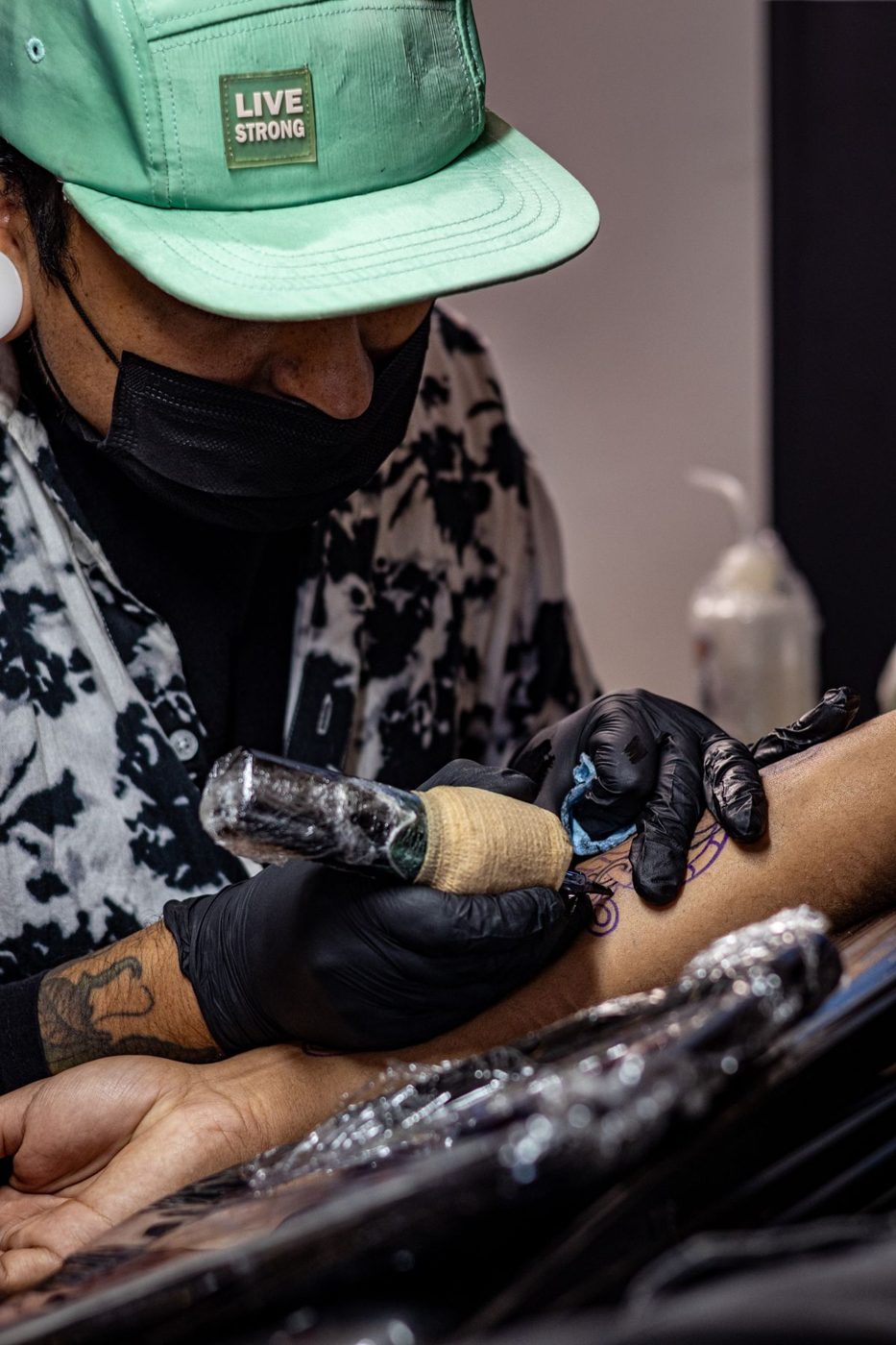
Most of the hourly rates we found on US shop pages sit between $150 and $250 an hour, with recognized artists asking more. Majestic Tattoo NYC says standard rates in New York City run $150 to $300 an hour, and that some of the most recognized artists ask at least $300. West 4 Tattoo in Manhattan lists $250 to $500 an hour for larger projects, depending on the artist.
Removery's cost guide, updated January 9, 2026, puts the average at $150 to $250 an hour. It doesn't say where that number comes from, so treat it as a ballpark. For the shop-by-shop version, jump to the city and region table below.
Newer artists usually charge less. Airtasker's cost guide, last updated October 1, 2026, estimates $50 to $100 an hour for artists with 0 to 2 years of experience and $100 to $150 for 2 to 5 years. That's a marketing estimate based on what it calls industry and third-party rates, not a survey.
Hourly is the default model for anything custom or larger than flash. Ask when the clock starts and stops. Some shops also charge a separate fee for drawing time: Aloha Tattoos in Murray, Utah lists a $150 drawing consultation that covers about 2 hours.
Why the spread? Experience compounds. A senior artist reads how a piece will flow with your body so it still looks intentional in a decade. You're not just buying hours. You're buying the hand that uses them. A lower hourly rate only saves you money if the work takes the same time and holds up the same way. Cheaper per hour is not cheaper per tattoo when it heals bad.
How Much Do Tattoos Cost by Size?
We could not find a published survey with a stated method that prices tattoos by size. What we could source: one New York shop's price guide, one Los Angeles studio's guide, and two cost guides that don't explain their numbers. Ranges are printed as the sources print them, in US dollars.
| Source (type, year) | Size or piece, as printed | Price, as printed |
|---|---|---|
| Cherry Bomb Studio, NYC (shop guide, July 2025) | Tiny (up to 2") | $100-$250 |
| Cherry Bomb Studio, NYC (shop guide, July 2025) | Palm-size | $250-$500 |
| Cherry Bomb Studio, NYC (shop guide, July 2025) | Hand-size | $500-$900 |
| Cherry Bomb Studio, NYC (shop guide, July 2025) | Half-sleeve or thigh panel | $900-$1,800 |
| Cherry Bomb Studio, NYC (shop guide, July 2025) | Full sleeve or back piece | Starts around $2,000 |
| Art Collector Tattoo, Culver City (studio blog guide, posted October 1, 2026) | Tiny tattoos (under 2 inches) | $100-$200 |
| Art Collector Tattoo, Culver City (studio blog guide, October 2026) | Medium tattoos (3-6 inches) | $350-$850 |
| Art Collector Tattoo, Culver City (studio blog guide, October 2026) | Large tattoos (7-9 inches) | $1000-$1900 |
| Art Collector Tattoo, Culver City (studio blog guide, October 2026) | XXL/sleeve tattoos | $3,500-$12,000+ |
| Airtasker US (marketing estimate, updated October 1, 2026) | Tiny, under 2 inches | $70 to $150+ |
| Airtasker US (marketing estimate, 2026) | Small, 2 to 3 inches | $70 to $200+ |
| Airtasker US (marketing estimate, 2026) | Medium, 3 to 6 inches | $80 to $450+ |
| Airtasker US (marketing estimate, 2026) | Large, 7 to 9 inches | $500 to $1,500+ |
| Airtasker US (marketing estimate, 2026) | Extra large, 10+ inches | $1,500 to $5,000+ |
| Removery (marketing estimate, updated January 9, 2026) | Chest tattoo | $500-$2,000 |
| Removery (marketing estimate, 2026) | Half-sleeve | $500-$1,500 |
| Removery (marketing estimate, 2026) | Full-sleeve | $1,500-$6,000 |
| Removery (marketing estimate, 2026) | Back tattoo | $1,500-$5,000+ |
The first thing the table tells you is that the sources don't agree. A full sleeve runs $1,500 to $6,000 in one guide and $3,500 to $12,000+ in another. That's not an error. It's what happens when price depends on the artist, the detail, and the city, and nobody is measuring all three.
The second thing is that size is really a stand-in for time. Cherry Bomb ties each tier to hours: a half hour to an hour for tiny work, one to two hours for palm-size, three to five for hand-size. It also separates what goes into the piece. A small flower or bold dagger sits at palm-size, $250 to $500. A portrait or detailed color neo-trad animal sits at hand-size, $500 to $900. Same hand, very different bill.
How Much Do Tattoos Cost by City and Region?
We could not find a published survey with a stated method for tattoo prices by region, so we didn't build a regional average. Instead, here is what named shops print on their own pricing pages, which we read on October 5, 2026. It's 17 US shops, not a statistical sample, and rates change. Check the shop's page before you budget.
| Place | Shop (shop page, read October 5, 2026) | Hourly rate, as printed | Shop minimum, as printed |
|---|---|---|---|
| New York, NY | Majestic Tattoo NYC | Standard NYC rates $150 and $300 an hour, some artists at least $300 | $75 for very small or minimal tattoos |
| New York, NY | Rising Dragon Tattoos | About $180-$200 an hour | $80 for small tattoos |
| New York, NY | Studio 28 Tattoo | $200 | $100 |
| New York, NY | Red Rocket Tattoo | Larger and multi-session work typically $250 an hour | $100 |
| New York, NY | West 4 Tattoo | $250-$500 for larger projects, by artist | Typically $200-$500 per tattoo, by artist |
| Wappingers Falls, NY | Hudson Valley Tattoo Company | $250 | $150 |
| Studio City, CA | Studio City Tattoo | $200 | $120 |
| Upland, CA | Six Feet Under Tattoo Parlor | Most artists $160-$300 | At least $100 cash |
| Seattle, WA | West Seattle Tattoo | Shop rate $200 plus tax, some artists more | $100 |
| Portland, OR | Sellwood Tattoo | $150 | $100 |
| Portland, OR | Tattoo 34 PDX | By the hour or per session, no figure listed | $150 |
| Sandy, OR | Pacific Northwest Tattoo Collective | $125.00 to $175.00 | $60 (a tattoo under 30 minutes, no bigger than 2"x3") |
| Bozeman, MT | Element Tattoo | $222 | $120 |
| Missoula, MT | Lovelife Tattoo Missoula (prices effective October 1, 2025) | $120-$180 | $100 |
| Murray, UT | Aloha Tattoos | Shop rate averages $200, artists $140 to $250 | $100 for most tattoos, $120-$150 for harder areas (its summary line also says $200) |
| Washington, DC and Silver Spring, MD | Fatty's Tattoos & Piercings | Minimum of $200 an hour for tattoos that take 7 hours or more | $100 base, $150 for head, face, neck, elbows, knees, hands, fingers and feet |
| Honolulu, HI | Tattoolicious | $200 standard average | $100-$150 depending on the artist |
A few things stand out.
New York alone is a wide band. Hourly rates in the five NYC rows run from $150 to $500, and minimums run from $75 to $500 depending on the shop and the artist. "NYC pricing" isn't one price.
City size is a poor predictor in this sample. The Wappingers Falls shop lists $250 an hour and a $150 minimum, above Studio 28 and Rising Dragon in Manhattan. The Bozeman shop lists $222 an hour. The Sandy, Oregon shop lists $125 to $175, below the Seattle shop's $200. Artist, style, and demand clearly matter as much as the zip code.
Floors are real. None of the 17 shops listed a minimum under $60, and 14 of the 17 list one at $100 or more. That's why the $40 tattoo doesn't exist.
Outside the US
Cost data gets thinner here, so we only list what we could open. Do not compare across currencies without converting.
| Place | Source (type, year) | Hourly rate, as printed | Minimum or day rate, as printed |
|---|---|---|---|
| Greater Toronto Area and Vancouver, Canada (CAD) | Chronic Ink (studio FAQ post, November 10, 2022) | Most start at $160 an hour | $80 minimum per tattoo |
| Teddington, London, UK (GBP) | Teddington Ink (studio blog post, August 26, 2026) | £100 to £200+ per hour | £500 to £1,000+ for a full day. Says most London studios have a minimum of £80-£150 |
We could not find a published survey with a credible method for either country. For city-level guesses, Airtasker publishes estimates. They are marketing estimates, not surveys, and the wide ranges show it. Ranges are printed as shown.
| City | Hourly estimate, as printed | Source (type, year) |
|---|---|---|
| New York City, NY | $150 to $600+ | Airtasker US (marketing estimate, updated October 1, 2026) |
| San Francisco, CA | $250 to $500+ | Airtasker US (marketing estimate, 2026) |
| Chicago, IL | $150 to $350+ | Airtasker US (marketing estimate, 2026) |
| Miami, FL | $150 to $300+ | Airtasker US (marketing estimate, 2026) |
| Houston, TX | $50 to $300+ | Airtasker US (marketing estimate, 2026) |
| Seattle, WA | $175 to $275+ | Airtasker US (marketing estimate, 2026) |
| Los Angeles, CA | $100 to $250+ | Airtasker US (marketing estimate, 2026) |
| Austin, TX | $150 to $250+ | Airtasker US (marketing estimate, 2026) |
| Atlanta, GA | $150 to $250+ | Airtasker US (marketing estimate, 2026) |
| Las Vegas, NV | $150 to $250+ | Airtasker US (marketing estimate, 2026) |
| Sydney, Australia (AUD) | $200 to $250 | Airtasker Australia (marketing estimate, updated August 27, 2026) |
| Melbourne, Australia (AUD) | $200 to $250 | Airtasker Australia (marketing estimate, 2026) |
| Central London, UK (GBP) | £120 to £250 | Airtasker UK (marketing estimate, updated August 27, 2026) |
| Manchester, UK (GBP) | £60 to £100 | Airtasker UK (marketing estimate, 2026) |
| Glasgow, UK (GBP) | £50 to £100 | Airtasker UK (marketing estimate, 2026) |
Hourly vs Piece Rate vs Day Rate: Which Applies to You?
Three pricing models, and which one you get depends on the size of the work.
Piece rate (flat price) covers small and medium tattoos: flash, simple linework, most things under a couple hours. The artist looks at the design and quotes one number. Studio 28 in New York says tattoos that take 2 hours or less are typically priced flat. Tattoo 34 PDX uses the same 2 hour line for its walk-in days. If a session runs long on a flat quote, you still pay the quoted price. This is the model most first-timers hit.
Hourly kicks in for custom work where time is genuinely unpredictable: heavy detail, black and grey realism, anything where the artist can't promise how long saturation will take. Hudson Valley Tattoo Company prices multi-session pieces hourly, per session.
Day rate is the move for big projects: sleeves, back pieces, full chest panels. The artist charges a fixed fee for a full day. Studio City Tattoo lists $1000.00 for a 6 hour day and says that saves $200.00 off the hourly. Tattoolicious in Honolulu prices full days at $1,000 to $2,000 for large projects like sleeves or bodysuits. In the UK, Teddington Ink lists £500 to £1,000+ for a full day. Day rates are how sleeves and back pieces actually get built, session by session over months.
Ask up front which model applies. A good artist tells you before you sit down. If the answer is vague, that's information.
What Drives the Price: Size, Detail, Placement, Demand
How much a tattoo costs comes down to four levers: size, detail density, placement, and the artist's demand. Size and detail set the baseline hours. Placement adds difficulty. Demand sets the rate per hour. Stack all four and you understand almost any quote you'll ever get.
Size is the obvious one: more skin to cover means more time. But time is what you're really buying, which is why the same hand can cost very different amounts depending on what goes in it. See the size table above.
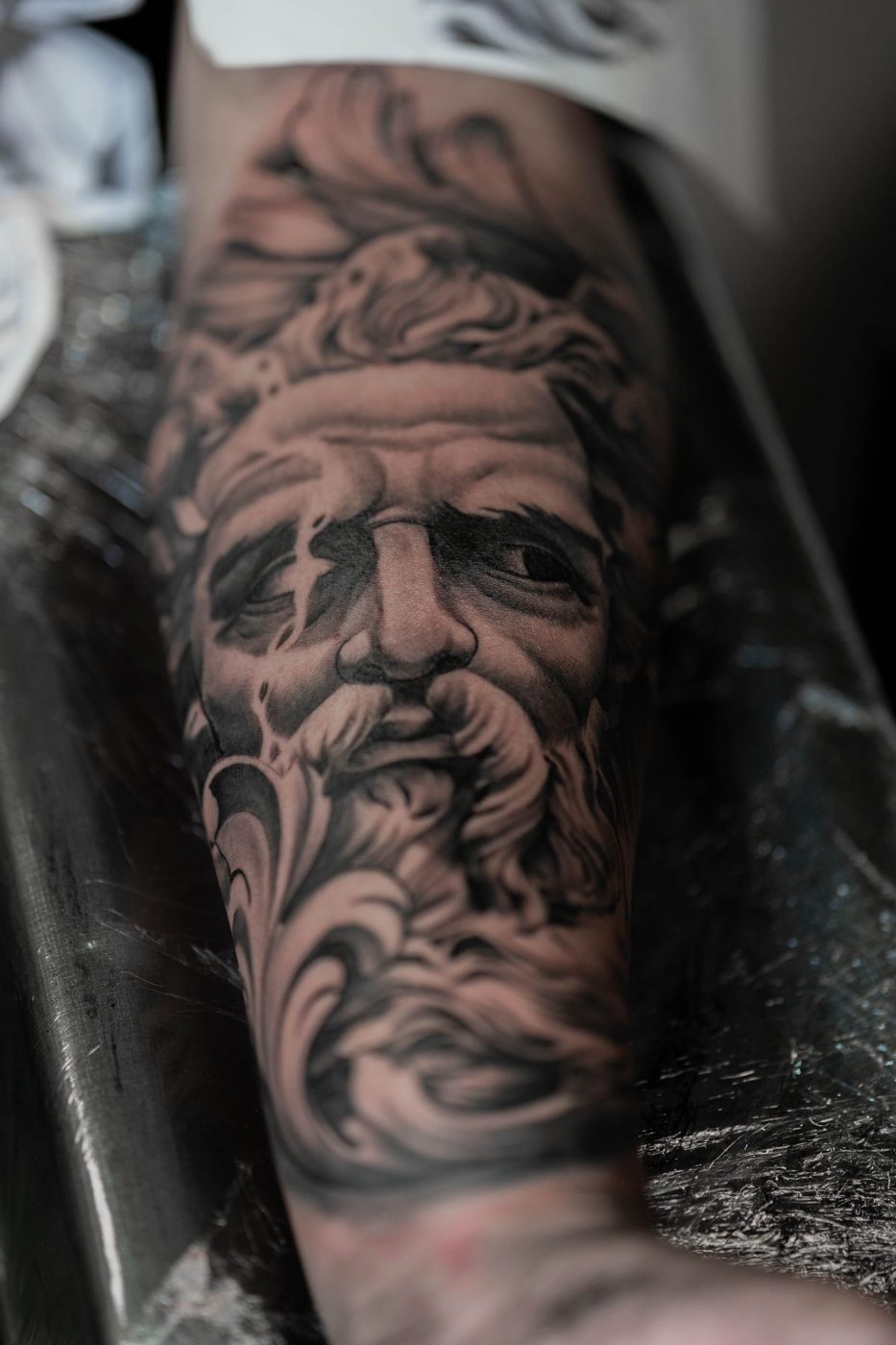
Detail and saturation are the real cost multipliers. Fine micro-realism, dense fine line work, and tight color blends eat hours. Bold trad with open negative space goes in fast. Cherry Bomb's guide shows it: a small flower or bold dagger at palm-size runs $250 to $500, while a portrait or detailed color piece at hand-size runs $500 to $900.
Placement changes the difficulty. Some spots are harder to tattoo, and shops price for it. Fatty's in the DC area lists a $150 minimum for the head, face, neck, elbows, knees, hands, fingers and feet, against $100 as its base. Aloha Tattoos lists a $120-$150 minimum for areas that are harder to tattoo because of skin conditions. Want to know which spots hurt most? Check the tattoo pain chart. Placement also changes how the piece ages, which is its own reason not to cheap out.
Demand is why two equally skilled artists quote differently. An artist with a long waitlist and a signature style, the kind collectors seek out by name, charges what that demand supports. That's not a markup. That's the market. Not sure whether an artist's rate matches their work? Our guide on how to vet a tattoo artist walks through what to check before you pay a deposit.
What's a Shop Minimum and Why Won't They Do Your Tiny Tattoo for $40?
A shop minimum is the floor price for any tattoo, no matter how small. In the table above, minimums run from $60 to $150 at most shops, with West 4 Tattoo listing $200 to $500 depending on the artist. Even a single dot costs the minimum, and no, they will not do it for the $40 in your pocket. None of the 17 shops we checked listed a minimum below $60.
Why the floor? Every tattoo, tiny or not, needs a fresh needle, new tubes, ink caps, gloves, barrier film, and a station that gets broken down and cleaned afterward. Then there's the artist's setup and stencil time. That doesn't shrink because your design is small. Pacific Northwest Tattoo Collective in Sandy, Oregon puts it in plain terms: its $60 minimum is for a tattoo that won't take more than 30 minutes, nothing bigger than 2 by 3 inches.
If you've only got the minimum to spend, the move isn't to haggle. It's to make the piece worth the floor. Ask the artist to size up the design or add detail so you're getting full value for what you're already paying.
How Much Should You Tip Your Tattoo Artist?
Tip around 20% of the total as the default. Costello Tattoo Studio in Los Angeles says most LA clients tip between 15 and 25 percent, and Certified Tattoo Studios lands on the same 15 to 25 percent range with 20 percent as the benchmark. Neither post shows a publication year, so treat this as shop-blog consensus, not a survey.
The percentage scales with the work. A quick flash piece at 15 to 20% is fine. A custom sleeve the artist designed from scratch and sat with you for eight hours? That earns the top of the range. Color work and dense saturation take longer and cost the artist more effort. Bump the tip accordingly.
Ask how your shop handles payment. Some shops run cash-only: Cherry Bomb lists itself as cash only, and Majestic Tattoo NYC says it's cash-only but takes cards through PayPal. Fatty's lists cash discount prices and says other forms of payment are 3% higher. On a big multi-session piece, ask your artist whether they'd rather be tipped each sitting or at the end. Just communicate.
One thing the minimum-budget crowd misses: the tip is part of the cost. If a $150 piece is genuinely all you have, you can't actually afford a $150 piece. Plan for $180.
Why "Cheap" Is the Biggest Red Flag in the Shop
The oldest line in the trade holds: good tattoos aren't cheap, and cheap tattoos aren't good. A quote that's dramatically below everyone else isn't a deal. It's a warning. Cheap can mean an untrained hand, cheap ink, and corners cut on the one thing that should never be cut: safety.
A "scratcher" is shop slang for an untrained, often unlicensed person tattooing out of a kitchen or a sketchy back room at bargain prices. Lucky Bamboo Tattoo's rundown on scratcher shops lists poorly done lines, scarring from lack of skill, and cheap ink that's more likely to fade faster, and says scratcher shops cut corners on client safety. On the health side, South Kesteven District Council in the UK warns that using unregistered tattooists risks infection with HIV, hepatitis, or other serious health problems. The danger isn't just bad art.
And then there's the haggle problem. xpaintattoo explains the math: if an artist cuts the price, they have three ways to make it work. Spend less time on the piece, use cheaper supplies, or skip steps in the setup. None of those is what you want holding the needle. Lovelife Tattoo Missoula puts it bluntly on its price page: prices are firm, and haggling will not be tolerated.
A bad piece can also turn into a coverup or a rework. Costello Tattoo Studio's LA guide says cover-ups almost always cost more than a fresh tattoo of the same size, and our cover-up guide covers what that process looks like. You don't save money going cheap. You defer the bill and add interest.
FAQ
How much does a small tattoo cost? Most small tattoos cost the shop minimum. At 14 of the 17 US shops we checked in October 2026, that minimum is $100 or more; at three shops it was $60 to $80, and West 4 Tattoo in New York lists $200 to $500 by artist. For a slightly larger piece, Airtasker's 2026 marketing estimate for 2 to 3 inches is $70 to $200+, and Cherry Bomb Studio's July 2025 guide lists tiny work up to 2 inches at $100-$250. Detail and the artist's rate move the number.
Do tattoo prices change by city? Yes, but less predictably than you'd think. Among 17 US shop pages we read in October 2026, stated hourly rates ran from $120 to $500, and most fell between $150 and $250. Within New York City alone, rates ran from $150 to $500 an hour. We could not find a published survey with a credible method for regional prices, so check the specific shop's pricing page.
Is it rude to ask a tattoo artist for the price? No. Asking the price up front is normal and expected: every reputable artist will quote you before you book. What's rude is haggling or trying to talk them down after they've given a fair number. Ask whether they charge hourly, by the piece, or a day rate, and what their shop minimum is. Clear questions are welcome; lowballing is not.
Should I tip if the tattoo was already expensive? Yes. The price you paid covers the artist's time, the shop's cut, and overhead: the tip is separate appreciation for the work itself. Aim for around 20% even on a pricey piece. If the total is genuinely large and a full 20% isn't doable, tip what you can and be upfront; most artists understand.
Why is one artist way more expensive than another? Demand and experience. An artist with a long waitlist, a signature style, and years of clean healed work charges what the market supports. A senior hand also works faster and cleaner, so a higher hourly rate can mean fewer hours overall. Cheaper isn't automatically a better deal: slow, low-skill work often costs more in time and touch-ups.
Are cheap tattoos ever worth it? Almost never. A quote far below the going rate can signal an untrained scratcher, cheap ink, or skipped safety steps, and the result can be a blown-out, fast-fading piece that needs an expensive coverup or laser removal later. Good work costs what it costs. If you can't afford the piece you want yet, save up rather than chasing a bargain you'll regret.
Tattoo pricing isn't mysterious once you break it apart. Small work hits the shop minimum. Bigger work runs hourly or a day rate. Size, detail, placement, and the artist's demand set the number, and a tip around 20% is part of the real cost, not an extra. The one rule that never bends: cheap is a warning, not a win.
Budget for the artist you actually want, not the quote that makes the math easy. The collectors with the best work didn't find a deal: they saved up and booked right the first time.
If you want to stay sharp on what tattoos actually cost, who's worth booking, and how to spend smart on a collection, the Tatulogue newsletter at tatulogue.com tracks this stuff with no content-farm filler. New here? Start with what Tatulogue is.